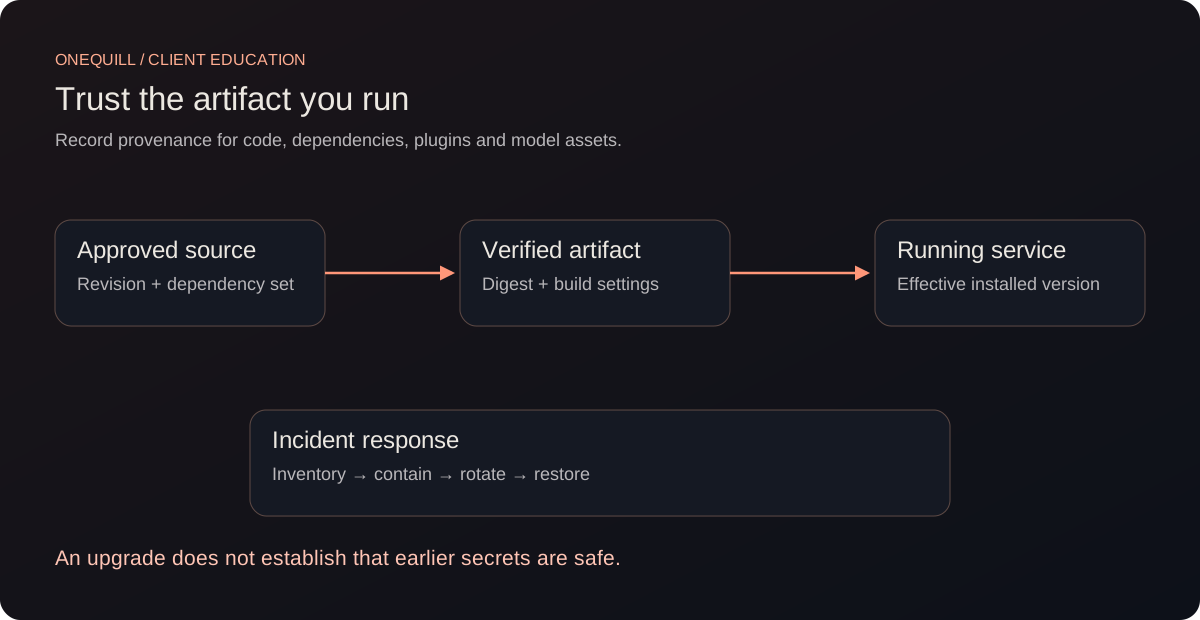
A dependency update is a change to executable code with the authority of the installation environment. Exposure assessment needs the actual artifact and install history, not just the top-level application name.
What deployment does this concern?
Component and scope: Malicious PyPI distributions, distinct from the vendor's official pinned Proxy Docker images.
Affected versions / scope: PyPI LiteLLM 1.82.7 and 1.82.8 during the reported publication window.
Vendor remediation: Vendor describes a clean 1.83 release and pipeline v2 on 30 March; incident response also requires containment and credential review.
The organisation installed or executed one of the affected PyPI versions. The vendor reports a roughly 40-minute window beginning at 10:39 UTC on 24 March. The vendor states its official Proxy Docker distribution was unaffected because it pinned requirements.
Vendor response and practical action
The vendor removed the affected packages, investigated the incident and rebuilt the release pipeline. Its account of a connection to a Trivy-related compromise is expressed as a belief, not independently established attribution.
Treat the vendor notice as the starting point for an applicability decision. Identify the installed artifact and configuration, document whether the prerequisite exists, and assign an owner to any required change. A public advisory does not establish that your installation was exposed or that a managed service shares the same condition.
What clients can learn
An upgrade removes a malicious artifact from the future path; it does not establish that previously accessible secrets are safe. Preserve artifact evidence, isolate affected environments and rotate credentials according to the incident investigation.
A useful evaluation result connects a named control to evidence from the actual deployment. Keep the provider's statement, your effective configuration and a relevant demonstration together. If the result depends on a feature being disabled or a network being isolated, retain that fact with the version number so a later change triggers review.
Questions to take to your provider
- What package versions and image digests were installed during the window?
- Which secrets and network permissions were available to that environment?
- Can builds be reproduced from a trusted, pinned dependency set?
- Who owns containment, rotation and verification before service resumes?
Use the six-page evaluation worksheet to record evidence, ownership and actions. Continue with AI gateway supply chain: trust the artifact you actually run for the wider evaluation context.
Technical detail: evidence and identifier limits
This article summarises the vendor's incident account. It does not reproduce malicious code, assert every LiteLLM installation was compromised or equate a package incident with the security of all deployments.
Evidence label: incident report. Source-review date: 2026-10-07. Source publication or event date: 2026-03-24. These dates do not change merely because this article is rebuilt.